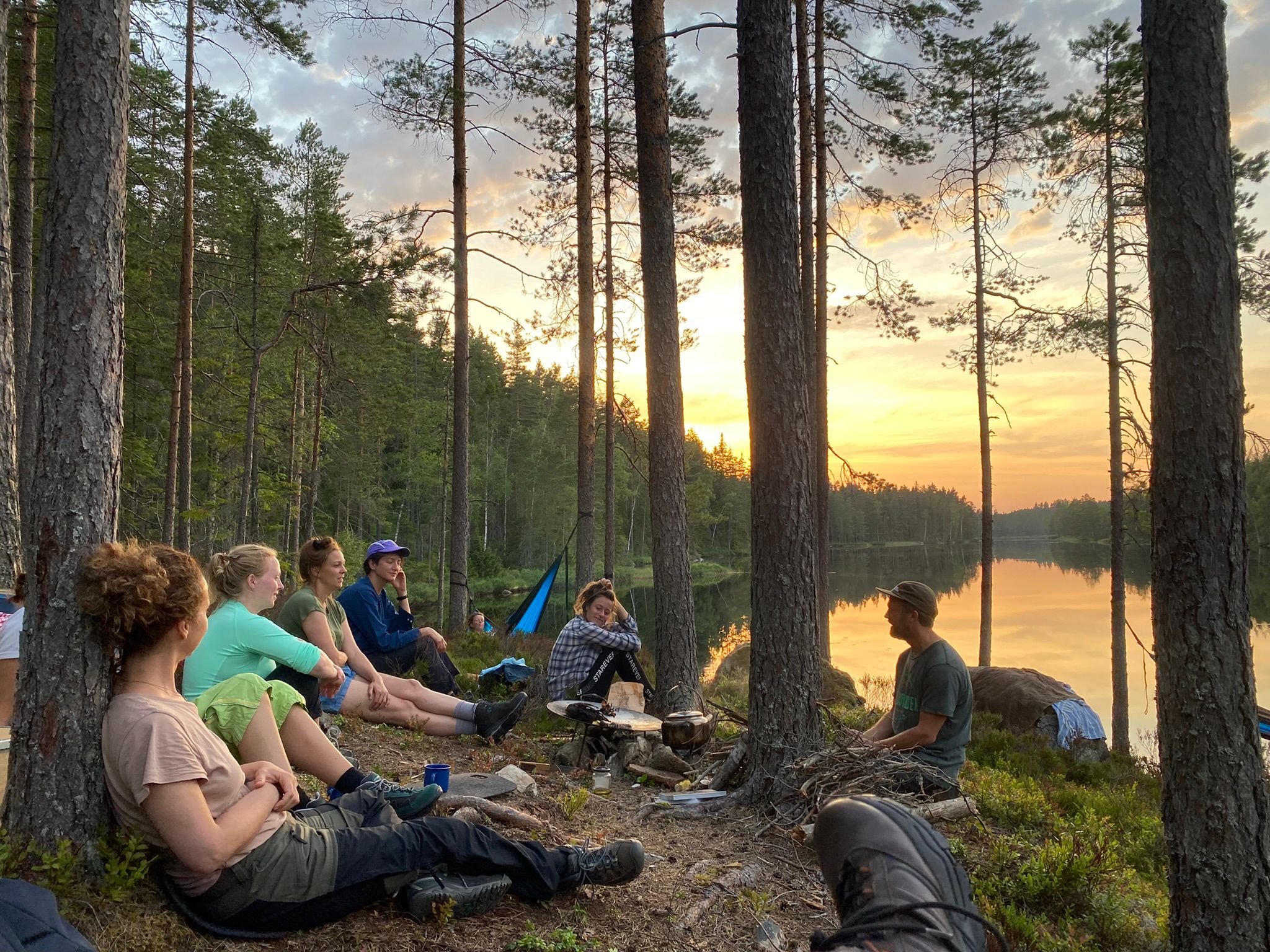

Facts about Wolves in Sweden
Wolves are part of Sweden’s wild forests — present, protected, and rarely seen. Even in wolf areas, most encounters are indirect: tracks in snow, scent marks, prey remains, and sometimes a distant howl in the dark.
Quick answers
Do wolves live in Sweden?
Yes — mainly in forested areas of south-central Sweden.
How many wolves are there?
The latest completed winter inventory (2024/2025) estimated about 355 wolves in Sweden and about 400 in Scandinavia. Estimates are based on mapped family groups, pairs, and verified observations during winter conditions.
Are wolves dangerous to humans?
Wolves avoid people. Attacks on humans are extremely rare.
Can wolves be dangerous to dogs or livestock?
Yes — conflicts mainly involve dogs and livestock, especially sheep.
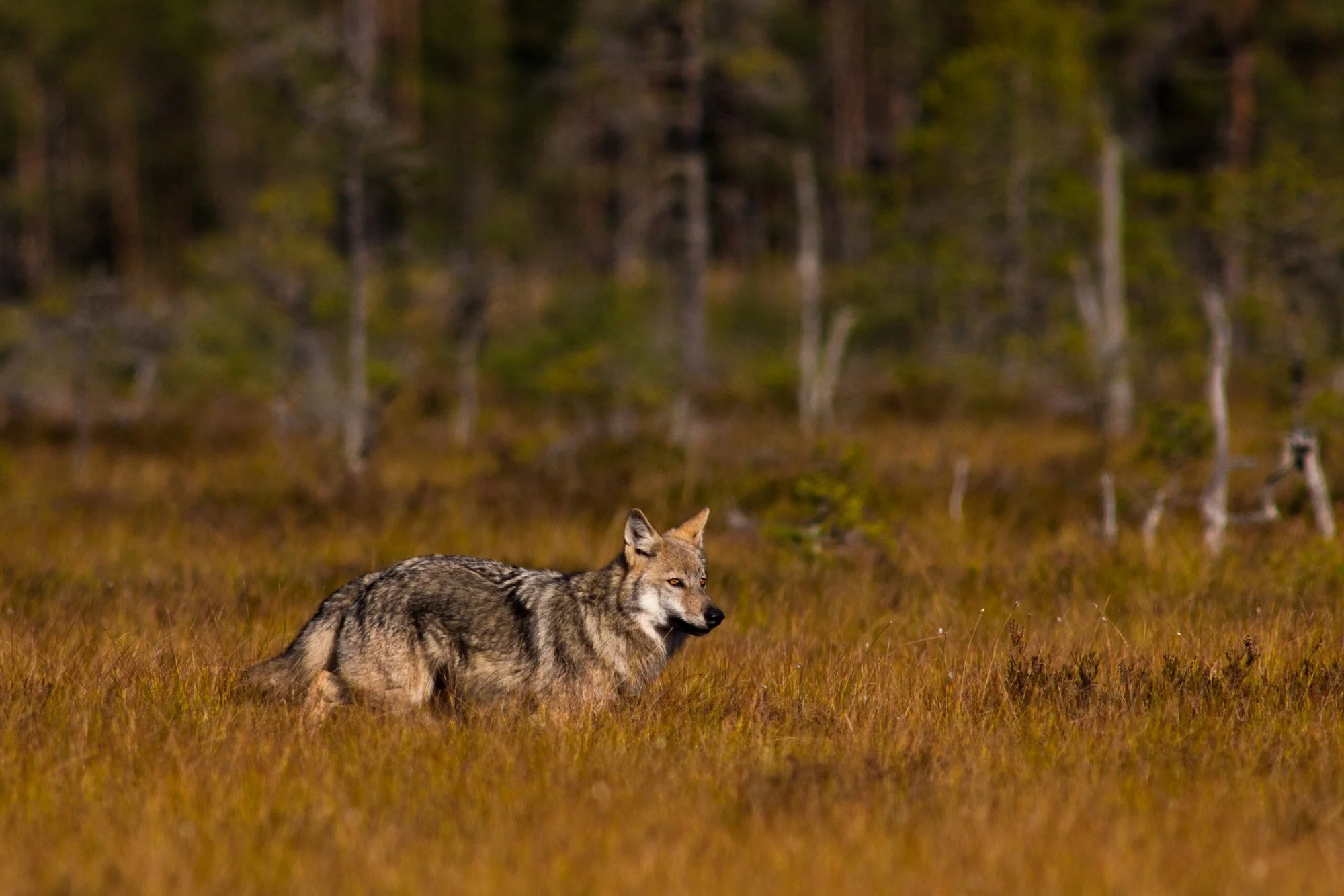
Young wolf in Västmanland, Sweden. Photo by Jan Nordström, WildSweden
Hunted to extinction
Wolves were hunted for centuries in Scandinavia — for fur, and to reduce conflicts with livestock like cattle and sheep. By the late 1800s, organised predator control had pushed wolves back across most of the region. By the mid-1900s the wolf was considered functionally gone from Scandinavia, and in Sweden it was officially regarded as extinct around 1960.
The return of the wolf to Scandinavia
In the early 1980s, wolves from the Finnish–Russian population began to recolonise south-central Scandinavia. A pair established itself, and the first confirmed litter was recorded in 1983. From that tiny starting point the population slowly grew, and later immigrants added badly needed genetic input.
Today’s Scandinavian wolf population is still relatively small and closely monitored — and its history is a big part of why wolves remain such a debated, managed species in Sweden.

Map showing the main wolf range in south-central Sweden with family groups (dots) and pairs without pups (triangles).
Where do wolves live in Sweden?
Wolves in Sweden are mainly concentrated in the forest landscapes of south-central Sweden, where large territories and lower human density allow them to move largely unnoticed.
Wolves are uncommon in the far north and uncommon in the far south.
Wolves are most often reported from regions such as Västmanland, Värmland, Dalarna, Örebro and Gävleborg.

Wolf population in Scandinavia, recent winters with the number of family groups (yellow), couples marking a territory (green) and the total number (line).
Status and population in Sweden
Sweden and Scandinavia track wolves through annual winter inventories. In the latest completed inventory (2024/2025), the estimate was about 355 wolves in Sweden and about 400 in Scandinavia.
Numbers change over time due to reproduction, natural mortality, traffic, legal hunting decisions, and illegal killing.
Are wolves dangerous in Sweden?
Wolves generally avoid people and do not seek contact. For humans, risk is extremely low.
The situations that matter most involve:
dogs (especially off-leash in wolf areas)
livestock (mainly sheep, sometimes other animals)
If you’re hiking with a dog in wolf areas, keep it leashed and avoid letting it run into dense forest. If you encounter a wolf, stay calm, keep distance, and let it move away.
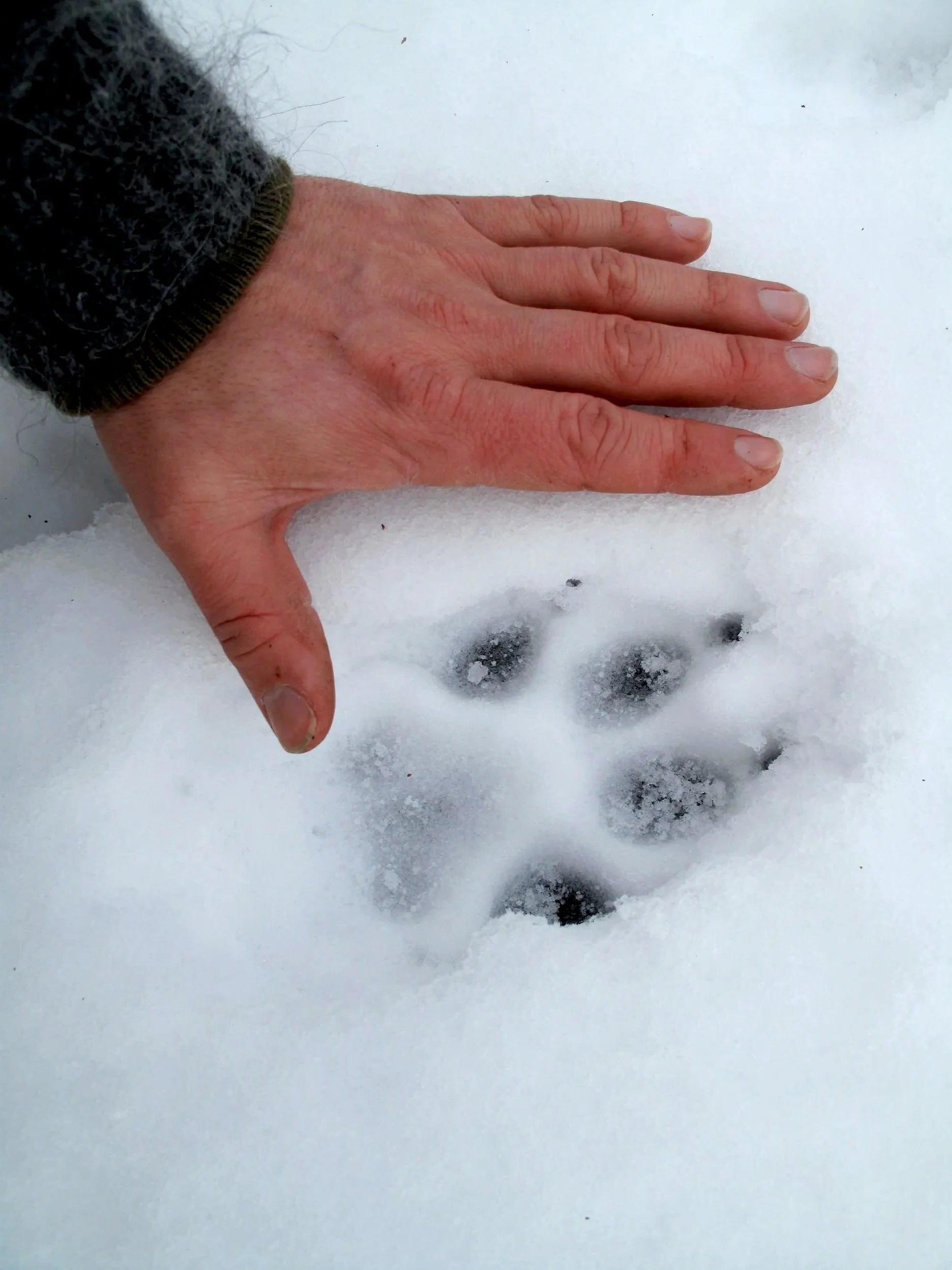
Wolf tracks and signs
The most realistic way to “meet” wolves in Sweden is through signs such as:
• tracks in snow, mud or sand
• scent marks and scrapes
• droppings (scat)
• prey remains (often hard to interpret without experience)
Winter makes signs easier to read. Snow turns the forest into a record of movement — and tracking becomes a way of understanding what happened.
How to experience wolves in Sweden
Expect tracks, not sightings — winter makes signs easier to read.
Focus on edges and forest roads where tracks are easier to spot.
Listen at night in known territories — howls are more realistic than sightings.
Go with local guides if you want the best chance of a responsible experience.

This illustration shows one possible way neighbouring territories and groups can be arranged in a landscape.
Wolf territories and family groups
Wolves may live as a breeding pair or as a family group (often called a pack). A typical family group consists of two parents and pups of the year. Some older siblings can sometimes help by staying with the group.
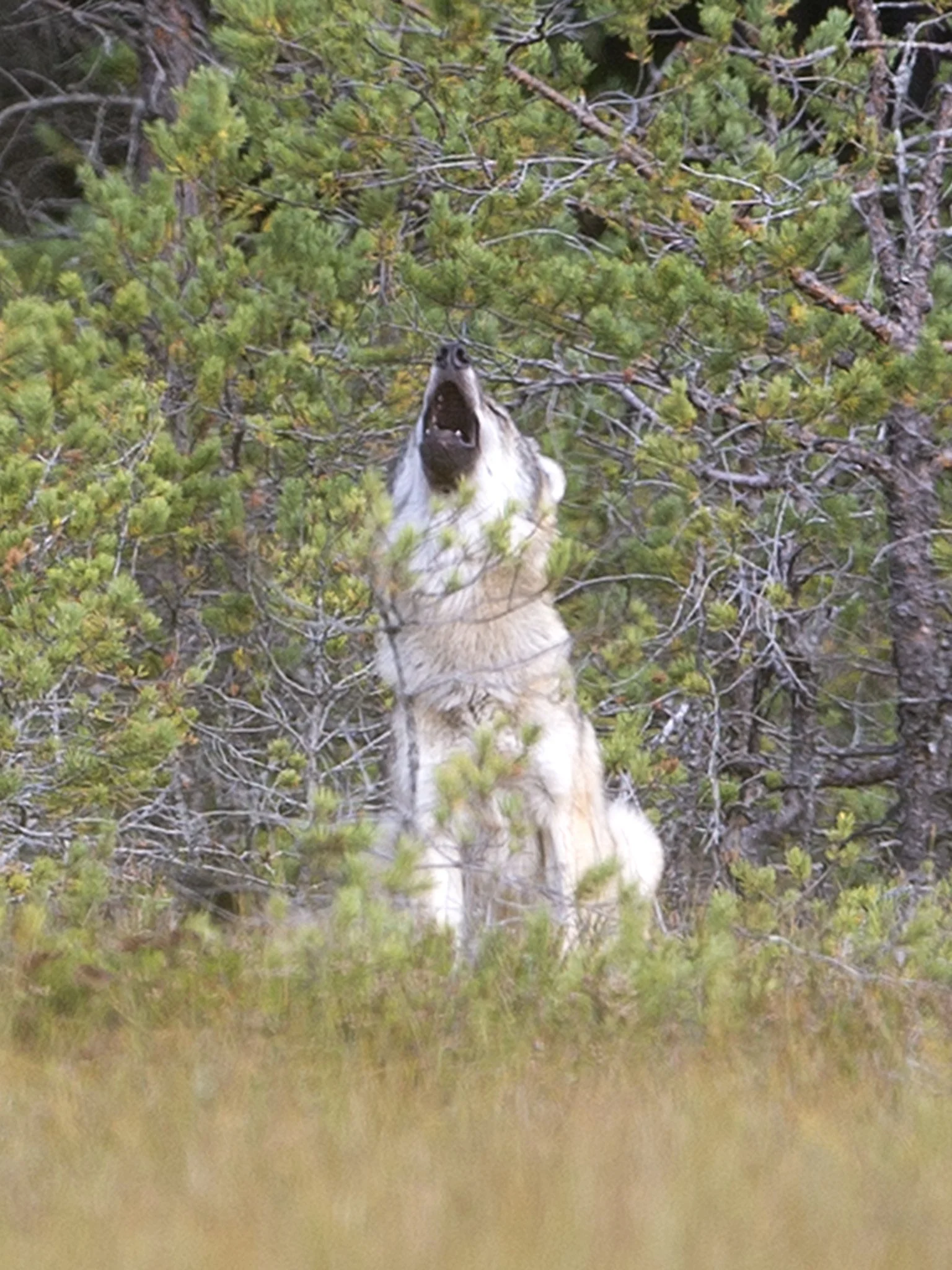
Why do wolves howl?
Howling is not constant “singing in the night” — it has a purpose. Wolves howl to:
• communicate across long distances
• keep contact within a family group
• signal territory presence to other wolves
• gather and coordinate movement
For many visitors, hearing wolves howl — even far away — is the most memorable wolf experience Sweden can offer.
Listen to wolves howling in Sweden
These are recordings of wold wolves howling, made by WildSweden guides.
Wolves (back) are larger than coyotes (middle) and red foxes (front). Illustration: NPS / Michael Warner
What is the size of a wolf?
Scandinavian wolves can reach up to about 90 cm at the shoulder.
Males often weigh 35–55 kg, and females are typically lighter.
Pups and dens
Wolves mate around late winter. Pups are usually born in late spring and stay close to a den site during their earliest weeks. Dens can be a dug-out hole in sandy soil or natural shelter among rocks and roots.
As pups grow, the family shifts between resting places — they do not “live in the den” year-round.
How long do wolves live?
Wolves can live up to about 12 years but rarely reach old age in the wild. Many die young, and only a minority reach adulthood and reproduce.
What do wolves eat in Sweden?
In Sweden, their main prey often includes moose, deer and wild boar, depending on region and season. They may also take smaller prey such as beaver and hare.
Occasional livestock attacks can occur in grazing areas, but this is not what wolves primarily live on.

Scandinavian wolves are large canids with thick seasonal fur. Their coat may look “grey” at a distance, but is usually a mix of cream, yellowish tones, brown and black. The throat and chin are often lighter. This is the male wolf in the former Kölsta territory, Sweden. Photo: Mats Bentmar
What threatens wolves in Sweden?
Wolf survival in Sweden is shaped mainly by human decisions and human-caused mortality. This includes management policies and hunting quotas, illegal killing, and traffic. Wolves may also die in territorial fights with other wolves.
Join a wolf tour in Sweden
On a guided wolf experience, the focus is not chasing an animal. The focus is learning to understand wolf presence through territory knowledge, tracking conditions, and quiet time in the forest — sometimes followed by listening for howls after dark.
Wolves in Sweden: Questions and answers
-
Yes. Wolves live mainly in forested areas of south-central Sweden. They are present but rarely seen, and most encounters are indirect (tracks, signs, occasional howls).
-
The latest completed winter inventory (2024/2025) estimated about 355 wolves in Sweden and about 400 in Scandinavia. Numbers vary between years.
-
In practice, “best” usually means quiet forest landscapes in south-central Sweden where wolves have territories. Summer is often the best season to experience wolf howling.
-
Yes. Wolves avoid people and the risk to humans is extremely low. Hike normally, keep distance to wildlife, and don’t follow animals.
-
They can be. The main risk is to off-leash dogs in wolf territories. Keep dogs leashed in known wolf areas, especially at dawn/dusk and in dense forest.
-
Occasional attacks can occur, especially involving sheep in grazing areas. This is part of why wolves are a managed and debated species in Sweden.
-
Howls help wolves communicate over long distances, keep contact within the family group, and signal territory presence to other wolves.
-
Main prey often includes moose, deer and wild boar, depending on region and season. They may also take smaller prey such as beaver and hare.
-
A territory is the home range a wolf pair or family group uses and defends. Size varies widely depending on prey availability and neighbouring wolves.
-
Most packs are family groups: two parents and pups of the year. Some young may stay longer before dispersing to form new territories.